Artificial Intelligence for Everyone: Critical Approaches from a Theoretical and Practical Perspective

Artificial Intelligence for Everyone: Critical Approaches from a Theoretical and Practical Perspective

Formation

General Objective

To critically reflect on the emergence and use of the main artificial intelligence tools in contemporary societies through the study of their historical development, the key technologies that compose them, the ethical, social, economic, and political challenges they raise, and the analysis of specific real-world cases.

Program Modules and Objectives

Module 1: From Automatons to Agents — A Brief History of Artificial Intelligence

This module provides an overview of the development of artificial intelligence, from its early conceptual antecedents to its evolution throughout the twentieth century and the most recent advances such as generative AI and autonomous agents.
Its objective is to offer a critical understanding of the historical evolution of AI and its present-day implications.

Module 2: AI Ethics and Social Protection Ecosystems

This module introduces the main computational tools of artificial intelligence, including machine learning and neural networks, while exploring their practical applications across various areas of everyday life.
Its objective is to promote a critical and reflective approach to the use of these technologies.

Module 3: The Ecosystem Surrounding Artificial Intelligence

This module presents a comprehensive view of the AI ecosystem, covering technical, ethical, legal, and governance dimensions.
Its objective is to analyze the major challenges posed by the implementation of AI across different sectors of society.

Module 4: Practical Applications Workshop

This module examines real and contemporary cases related to the use of artificial intelligence, addressing issues such as privacy, authorship, algorithmic bias, and labor impacts.
Its objective is to apply the knowledge acquired throughout the program to critically reflect on concrete situations.

Download course brochure

Register here
WhatsApp

Contact

We welcome your inquiries. Please use the form below to request information, share feedback, or explore potential collaboration opportunities

Calle Newton 186, Polanco, Miguel Hidalgo, 11560 Ciudad de México

Call us

(52) 55 4358 0019
(52) 55 1334 4054
(52) 55 2648 5116

Schedule

Monday to Friday from 9:00 a.m. to 6:00 p.m.

AI Deployment Supervisor

AI Deployment Supervisor

Formation

Objective

To train professionals capable of supervising and coordinating the deployment of artificial intelligence projects—from strategic planning to operational implementation and monitoring.

The program integrates performance metrics, ethical principles, governance frameworks, and practical tools that enable reliable execution aligned with business objectives and international compliance standards.

Target Audience

This program is designed for organizations developing or deploying artificial intelligence systems for decision-making, whose executives, senior management, or operational teams have responsibilities in areas such as:

  • Information systems
  • Information technology (IT)
  • Privacy and data protection
  • Information security
  • Legal and regulatory affairs
  • Software development
  • Data science
  • Databases and data storage
  • Digital marketing
  • Digital commercialization of products or services
  • Human resources (talent recruitment)
  • Compliance officers
  • Procurement and software acquisition processes
  • Internal auditing
  • Privacy and data protection officers

Program Modules and Objectives

Module 1: Fundamentals and Lifecycle Stages of AI Projects

Understand the phases of the AI project lifecycle, the roles and responsibilities involved in each stage, and how deployment is integrated within a structured and efficient process.

Module 2: Strategies, Goals, and Success Metrics for AI Deployment

Provide participants with a practical framework to define clear objectives, establish key performance indicators (KPIs), and develop strategies that ensure AI initiatives deliver measurable business value.

Module 3: Ethics, Governance, and Compliance in AI

Apply principles of AI ethics, algorithmic accountability, transparency, and regulatory compliance to AI projects, integrating these elements as foundational pillars from design to deployment and ongoing operation.

Module 4: Tools, Techniques, and Practices for Supervising AI Deployment

Provide practical tools and methodologies for supervising, coordinating, and supporting the deployment of AI systems, including collaboration with technical teams, operational integration, and change management.

Register here

WhatsApp

Contact

We welcome your inquiries. Please use the form below to request information, share feedback, or explore potential collaboration opportunities

Calle Newton 186, Polanco, Miguel Hidalgo, 11560 Ciudad de México

Call us

(52) 55 4358 0019
(52) 55 1334 4054
(52) 55 2648 5116

Schedule

Monday to Friday from 9:00 a.m. to 6:00 p.m.

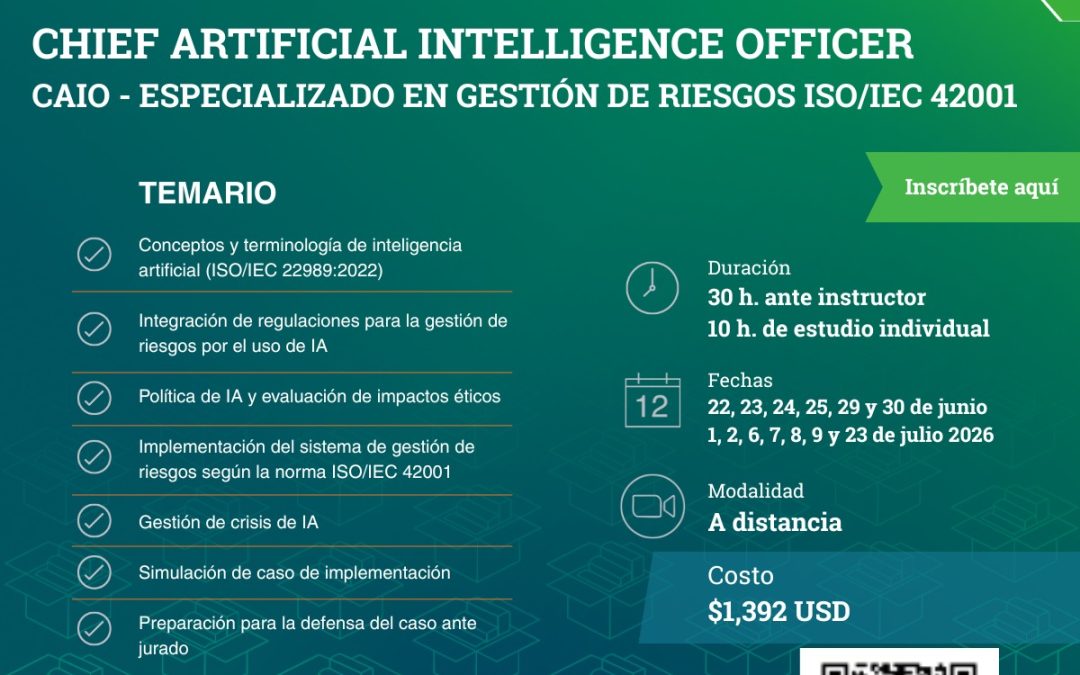
CAIO – Specialized in Risk Management (ISO/IEC 42001)

CAIO – Specialized in Risk Management (ISO/IEC 42001)

Formation

Objective

Designed for organizations seeking to appoint an AI supervisor with the expertise required to implement a risk management system based on ISO/IEC 42001:2023 – Information Technology – Artificial Intelligence Management System.

The program provides participants with the theoretical and practical foundations necessary to initiate the implementation of an AI management system and to prepare for third-party audits, thereby strengthening governance and protecting business models.

Target Audience

This program is designed for executives, senior management, auditors, compliance officers, and professionals involved in activities related to:

  • Information technology
  • Deployment of artificial intelligence models
  • Risk management consulting
  • Corporate governance
  • Data science
  • Auditing
  • Corporate integrity and compliance programs
  • Supervision of AI systems
  • Risk management functions
  • Government and public policy
  • Data protection and privacy officers
  • Compliance and regulatory affairs

Program Modules and Objectives

Module 1: Artificial Intelligence Concepts and Terminology (ISO/IEC 22989:2022)

Objective: Provide a comprehensive understanding of the fundamental concepts and terminology of artificial intelligence according to the ISO/IEC 22989:2022 standard. Participants will learn to identify and apply these concepts within the context of AI management in their organizations, while also understanding emerging trends and the strategic value of data.

Module 2: Integration of Regulatory Frameworks for AI Risk Management

Objective: Understand how international regulations and local legal frameworks impact the implementation and operation of an AI risk management system under ISO/IEC 42001. Participants will learn how to integrate regulatory requirements into AI risk management frameworks, ensuring compliance and mitigating legal risks.

Module 3: AI Policy and Ethical Impact Assessments

Objective: Establish responsible policies for the use of AI and develop the capacity to evaluate the ethical and social impacts of AI systems. Participants will learn how to formulate and implement AI policies and conduct ethical impact assessments aligned with international best practices.

Module 4: Implementation of the AI Management System (ISO/IEC 42001)

Objective:
Develop a comprehensive AI risk management system in accordance with the criteria and guidelines established in ISO/IEC 42001:2023. Participants will learn to identify, assess, and treat risks associated with the use of AI within their organizations.

Module 5: AI Crisis Management

Objective: Learn how to design crisis management strategies related to AI deployment and incident response. Participants will develop the ability to communicate effectively with stakeholders and the broader public environment during AI-related crises.

Preparation for Case Defense Before a Jury

Objective: Participants will work in group sessions to develop and present a practical case. During this process, they will produce four deliverables designed to support the implementation of an AI management framewor

Certification

Upon successful evaluation, participants receive a certification recognizing them as Artificial Intelligence Compliance Officers specialized in AI Risk Management under ISO/IEC 42001, issued by NYCE, Mexico’s National Standards Body and a leading organization in evaluation and certification, with representation in more than 85 countries.

Download course brochure

Register here
WhatsApp

Contact

We welcome your inquiries. Please use the form below to request information, share feedback, or explore potential collaboration opportunities

Calle Newton 186, Polanco, Miguel Hidalgo, 11560 Ciudad de México

Call us

(52) 55 4358 0019
(52) 55 1334 4054
(52) 55 2648 5116

Schedule

Monday to Friday from 9:00 a.m. to 6:00 p.m.

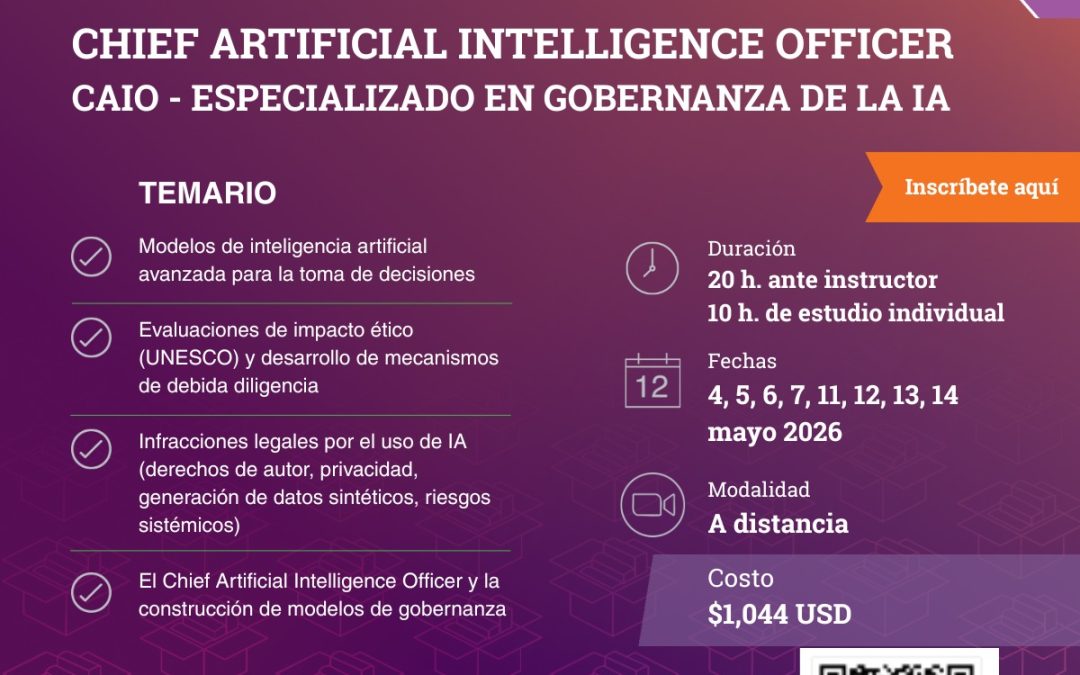
CAIO – Specialized in AI Governance

CAIO – Specialized in AI Governance

Formation

Objective

To develop the skills required to design and implement artificial intelligence governance models for executives, managers, and organizational leaders seeking to protect their advanced AI systems.

Participants will gain a comprehensive understanding of existing regulatory frameworks, due diligence mechanisms, and ethical impact assessments. The program also equips participants with the analytical tools necessary to identify potential violations related to privacy, copyright, and the generation of synthetic data within the responsibilities of the Chief Artificial Intelligence Officer.


Target Audience

    • This program is designed for professionals and decision-makers involved in the governance, regulation, deployment, or oversight of artificial intelligence, including:
    • Lawyers
    • Consultants
    • Compliance officers
    • Judges
    • Prosecutors
    • Notaries and public brokers
    • Legislative advisors
    • Public officials
    • Professionals responsible for implementing AI within an organization
    • Auditors
    • Data protection and privacy officers
    • Professionals responsible for patent, trademark, and copyright registration
    • Executives and managers of legal departments
    • Privacy and data governance experts
    • Corporate legal teams operating in European markets
    • Leaders responsible for the commercialization of digital products or services
    • Human resources departments
    • Procurement and public bidding specialists

Program Modules and Objectives

Module 1: Advanced Artificial Intelligence Models for Decision-Making

Objective: Understand the fundamentals of generative AI and agentic AI for decision-making, while exploring their applications across business environments. The module focuses on how these technologies can transform organizations by creating strategic value.

Module 2: Ethical Impact Assessments (UNESCO) and Due Diligence Mechanisms

Objective: Develop the skills required to conduct due diligence processes within public and private organizations through the application of ethical principles and governance frameworks proposed by UNESCO.

Module 3: Legal Violations Related to the Use of AI (Copyright, Privacy, Synthetic Data, Systemic Risks)

Objective: Examine the legal frameworks governing advanced AI systems, with particular attention to regulations concerning privacy, copyright, intellectual property, and the generation of synthetic data used for training AI models.

Module 4: The Chief Artificial Intelligence Officer and the Development of Governance Models

Objective: Understand the importance of building structured AI governance models through the role of the Chief Artificial Intelligence Officer (CAIO) and implementing effective risk management strategies related to the deployment of artificial intelligence.

Concept Examination

Participants will demonstrate mastery of key concepts related to AI systems, AI ethics, and the role of the CAIO in the development of governance models within organizations.

Practical Case Study

Participants will be required to resolve a real-world AI governance problem by applying the knowledge acquired throughout the program modules.

Download course brochure

Register here
WhatsApp

Contact

We welcome your inquiries. Please use the form below to request information, share feedback, or explore potential collaboration opportunities

Calle Newton 186, Polanco, Miguel Hidalgo, 11560 Ciudad de México

Call us

(52) 55 4358 0019
(52) 55 1334 4054
(52) 55 2648 5116

Schedule

Monday to Friday from 9:00 a.m. to 6:00 p.m.
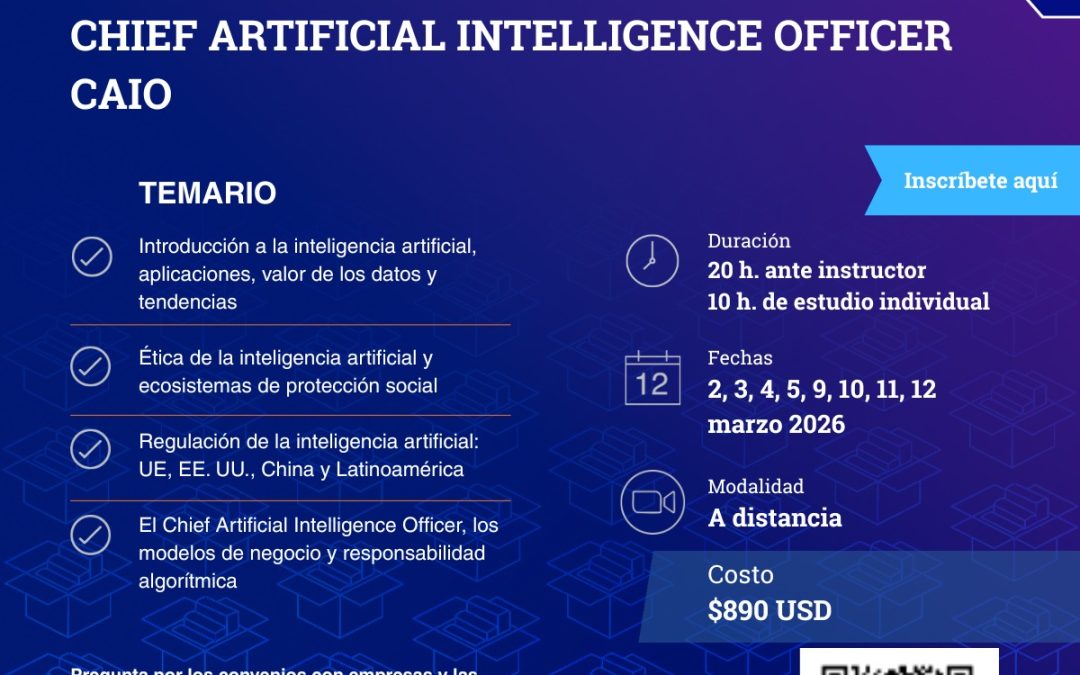
CAIO – Chief Artificial Intelligence Officer

CAIO – Chief Artificial Intelligence Officer

Formation

Objective

To train professionals from diverse disciplines and organizational leaders in the practical applications of artificial intelligence, the strategic value of data, the integration of ethics as an instrument of social protection, the understanding of major regulatory frameworks, and the supervisory role performed by the Chief Artificial Intelligence Officer (CAIO) to safeguard business models.


Target Audience

Organizations that are developing or using artificial intelligence for decision-making, whose executives, senior management, or operational teams have responsibilities in areas such as:

  • Information systems
  • Information technology (IT)
  • Privacy and data protection
  • Information security
  • Legal and regulatory affairs
  • Software development
  • Data science
  • Databases and data storage
  • Digital marketing
  • Digital product or service commercialization
  • Human resources (recruitment and talent management)
  • Compliance officers
  • Procurement and bidding processes
  • Internal auditing
  • Privacy and data protection officers

The program is also designed for government officials involved in the development or implementation of AI systems for decision-making, public policy design and monitoring, improvement of public services (including smart city initiatives), and areas related to security and justice systems.

Program Modules and Objectives

Module 1: Introduction to Artificial Intelligence — Applications, Data Value, and Emerging Trends

Analyze the evolution of key AI concepts, their applications across different sectors, the strategic value of data, and current trends in AI development, enabling participants to apply this knowledge in their professional activities.

Module 2: Artificial Intelligence Ethics and Social Protection Ecosystems

Understand the ethical principles applicable to AI, addressing the social and economic implications of this technology in order to develop competencies for designing and maintaining social protection ecosystems that ensure the responsible use of AI.

Module 3: Artificial Intelligence Regulation — EU, United States, China, and Latin America

Provide a general understanding of existing AI regulatory frameworks across different countries and regions, including the European Union, the United States, China, and Latin America.

Module 4: The Chief Artificial Intelligence Officer, Business Models, and Algorithmic Accountability

Objective: Develop specific competencies for the role of the Chief Artificial Intelligence Officer (CAIO), based on an understanding of different business models and the use of artificial intelligence, while examining real-world cases of algorithmic accountability.

Concept Examination

Participants will demonstrate mastery of fundamental concepts related to AI systems, AI ethics, and the role of risk management specialists within organizations.

Practical Case Study

Participants will be required to solve a practical case involving the use of artificial intelligence, applying the knowledge acquired throughout the program modules.

Download course brochure

Register here
WhatsApp

Contact

We welcome your inquiries. Please use the form below to request information, share feedback, or explore potential collaboration opportunities

Calle Newton 186, Polanco, Miguel Hidalgo, 11560 Ciudad de México

Call us

(52) 55 4358 0019
(52) 55 1334 4054
(52) 55 2648 5116

Schedule

Monday to Friday from 9:00 a.m. to 6:00 p.m.

Carrito de compra0
No hay productos en el carrito